

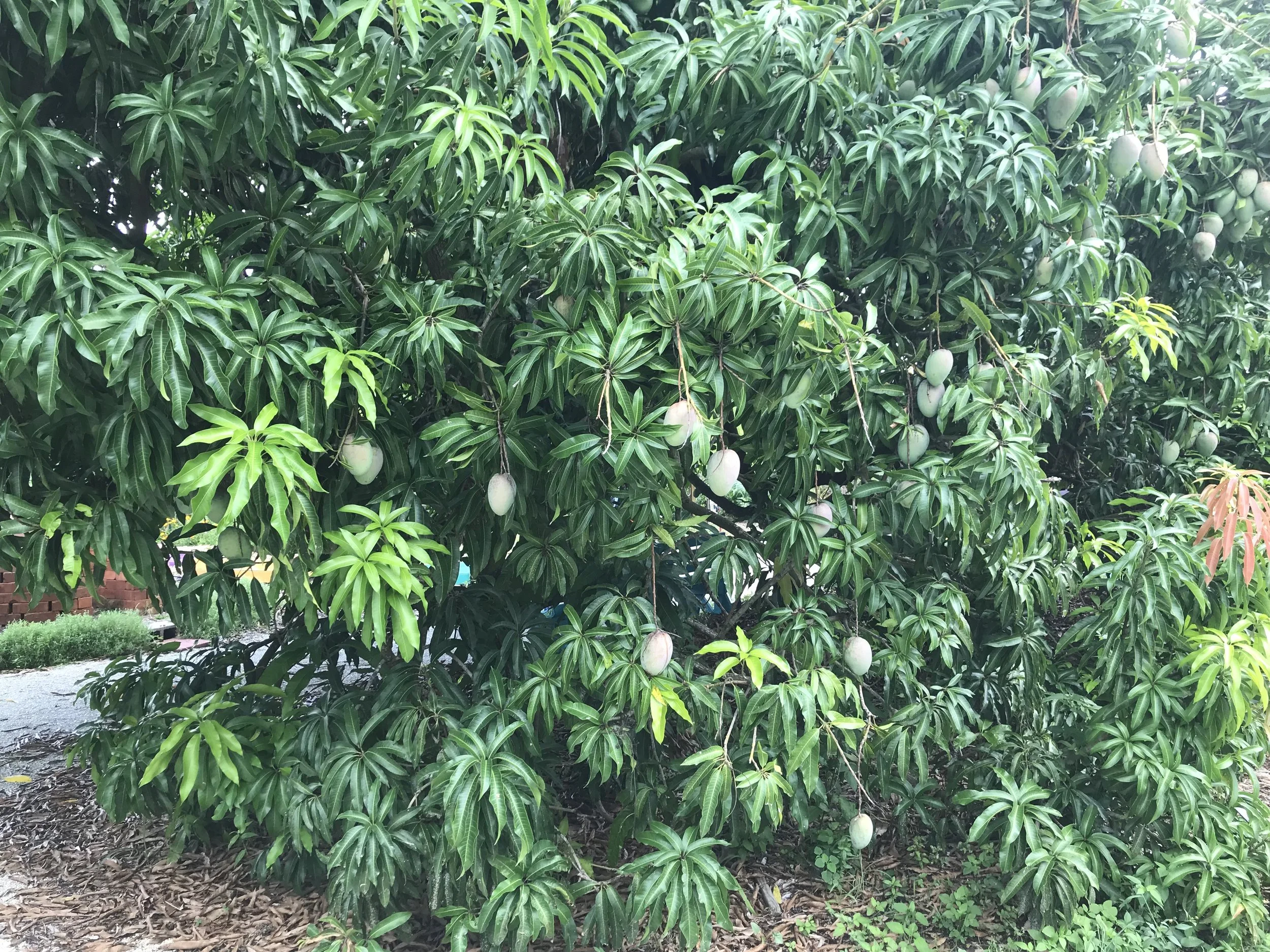
Mango Tree Pruning & Care
LET US PRUNE YOUR MANGO TREE FOR FRUIT PRODUCTION AND TREE SIZE MANAGEMENT
Professional care for your Mango Trees
Mango pruning
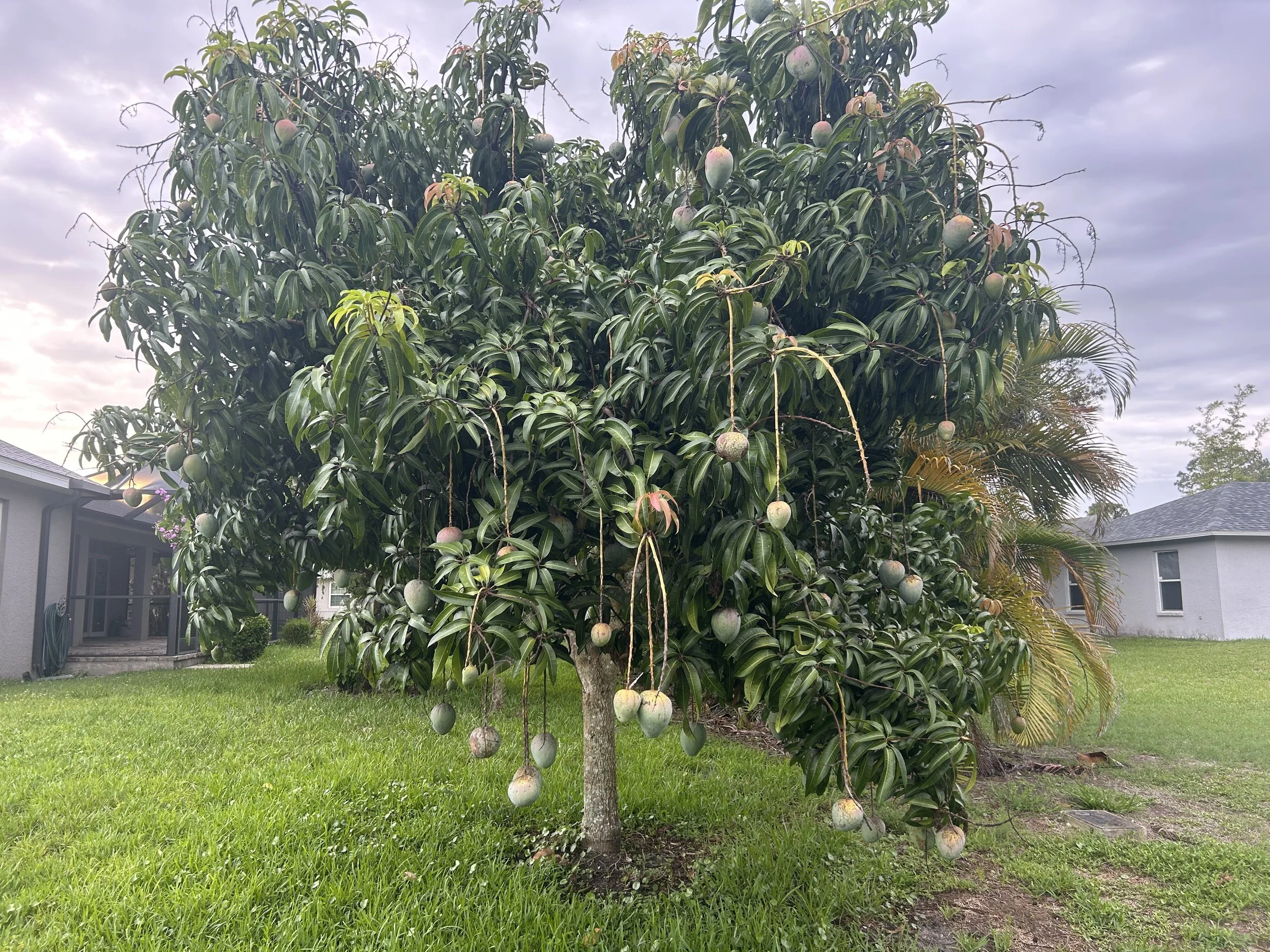
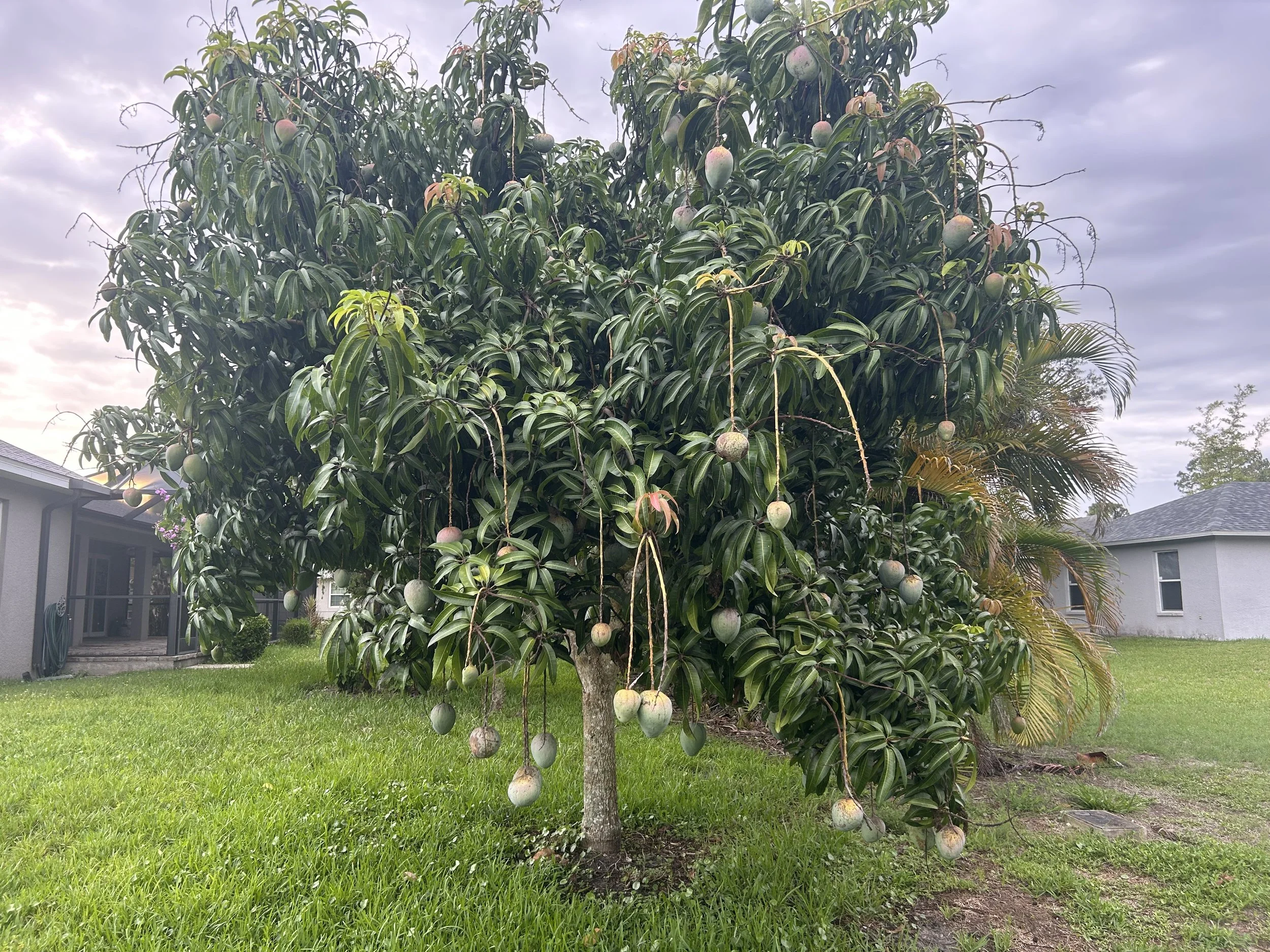
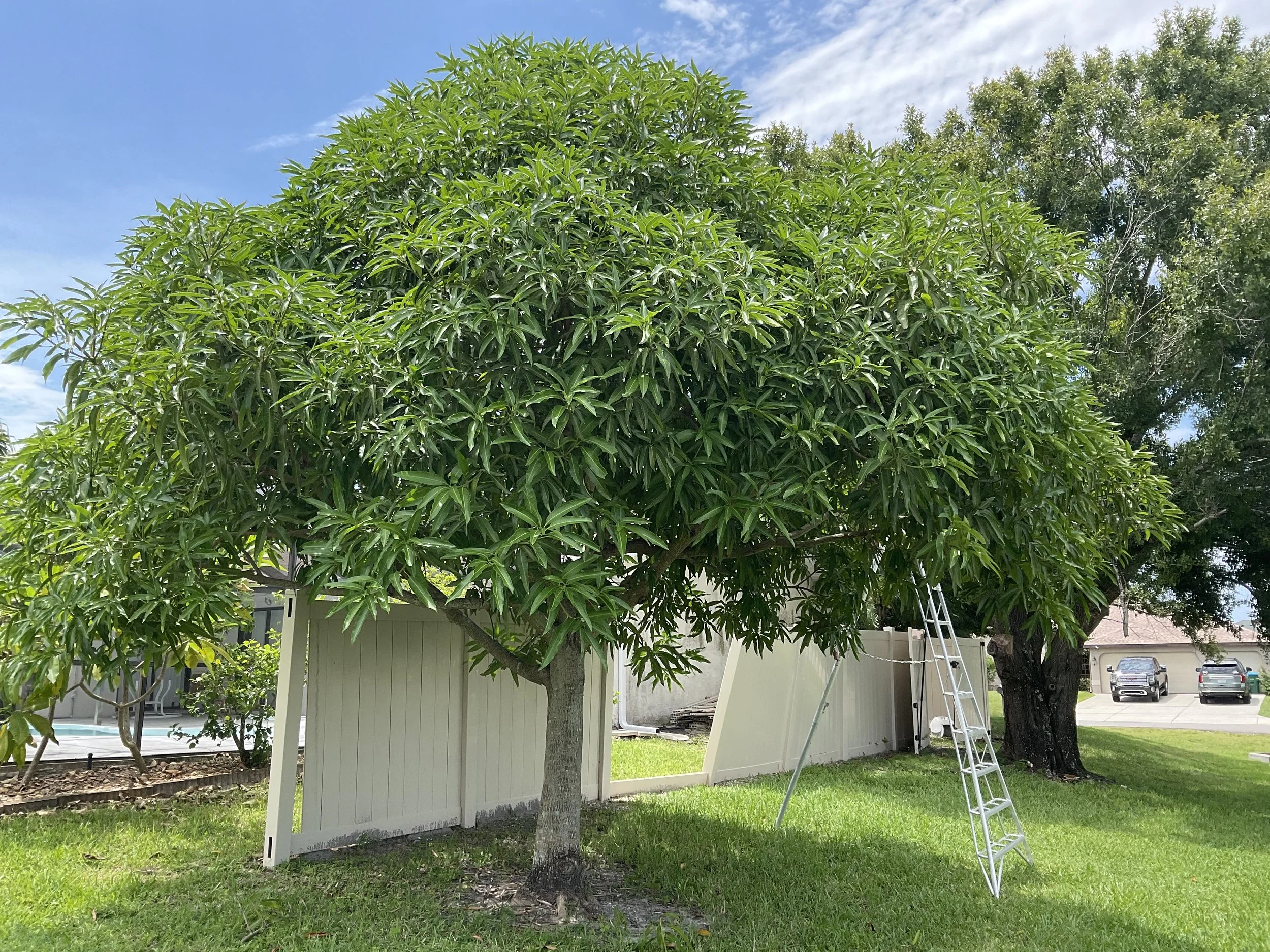
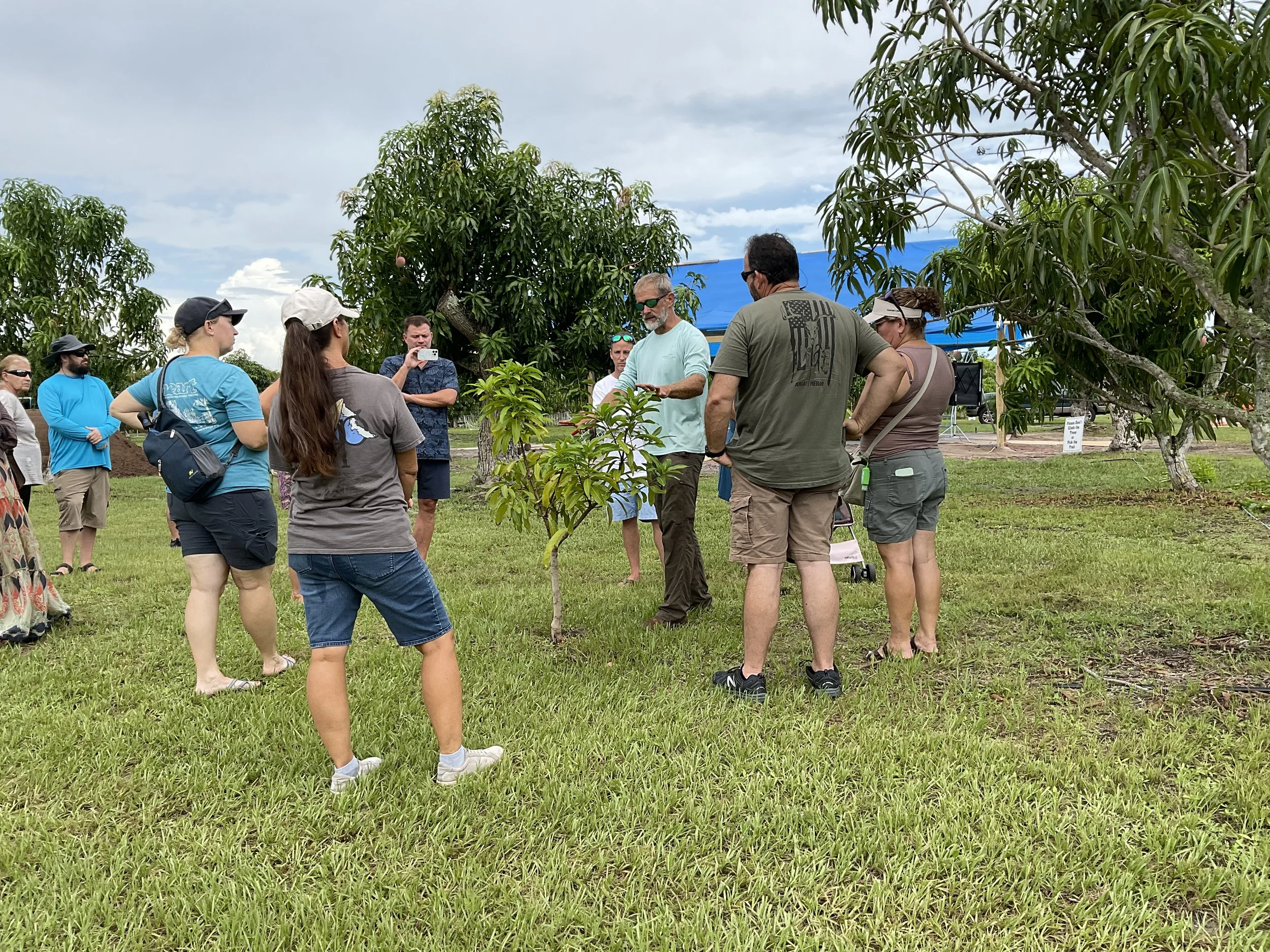
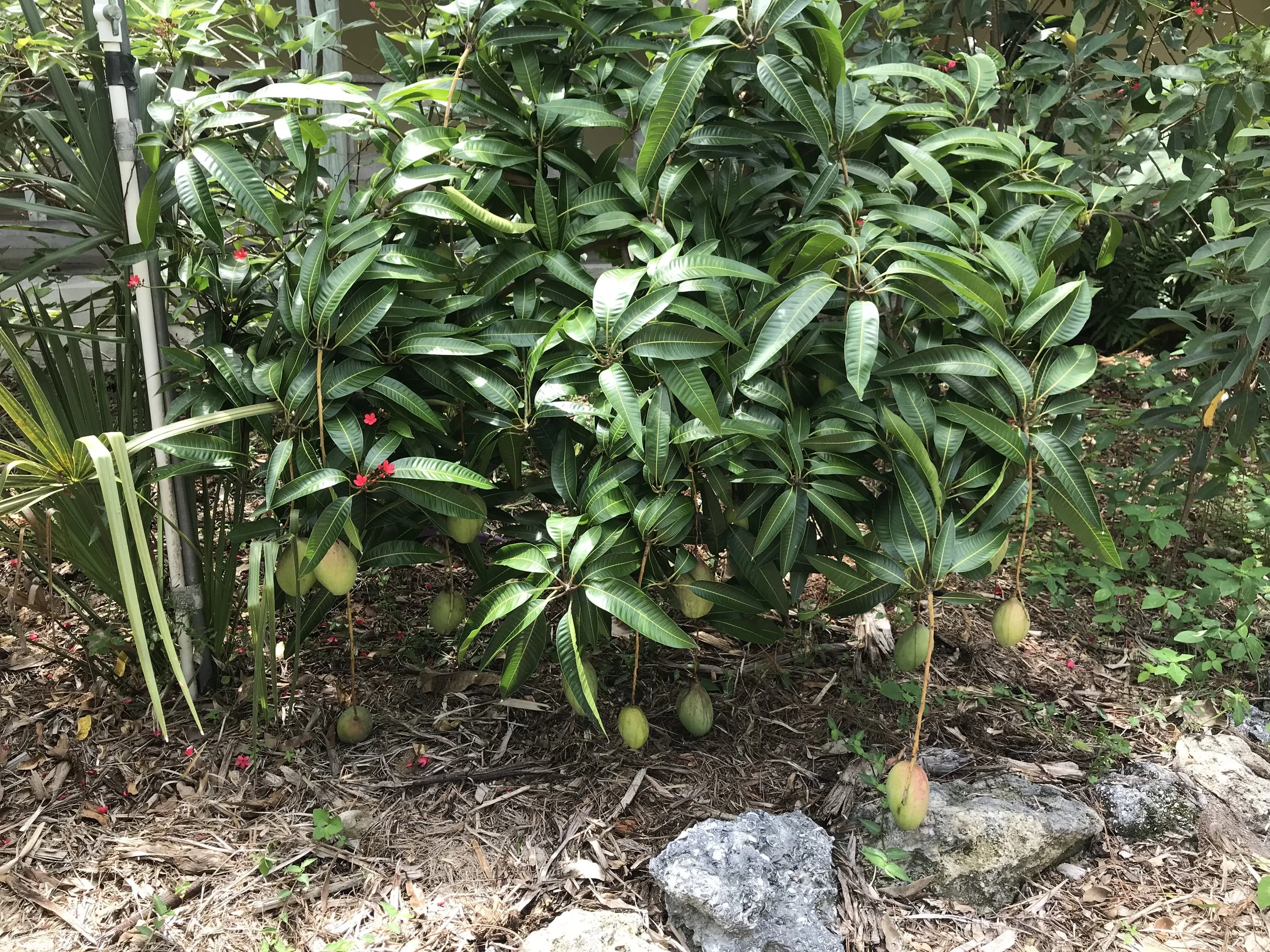
At Ecovision we want your mango trees to be productive, healthy, and manageable. Size management is critical to allow you to harvest the fruit and prevent your tree from outgrowing your yard. A well shaped tree will also be less susceptible to wind damage during hurricanes.
We offer mango pruning that is focused on tree health, fruit production, size management, and storm resilience.
Note:
We do not offer large tree arborist services. We only prune mango and other fruit trees that are below 25 feet in overall height.
Our Approach to Mango Pruning
layeredlist
imageradius
-
1. Mango Tipping
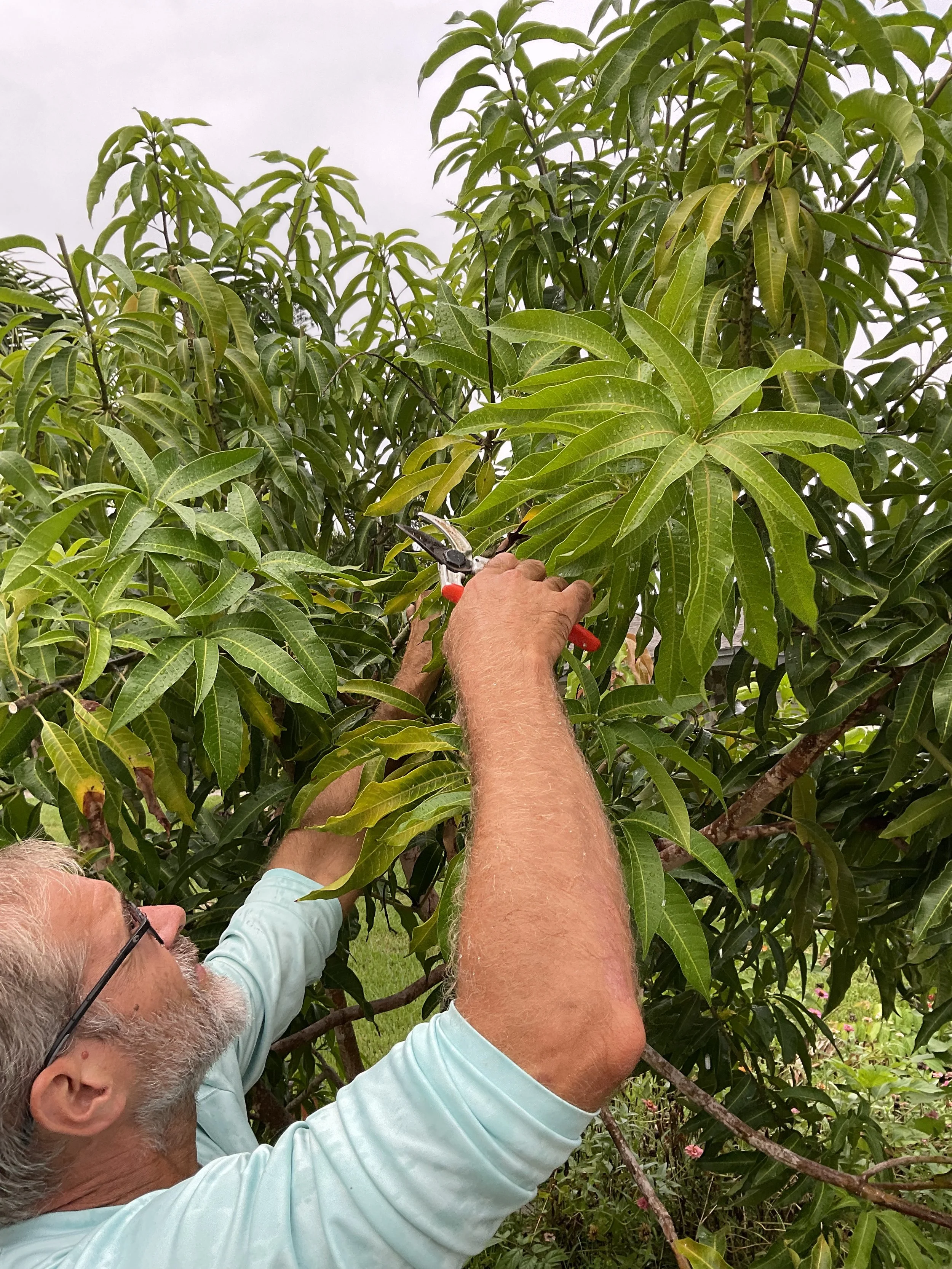
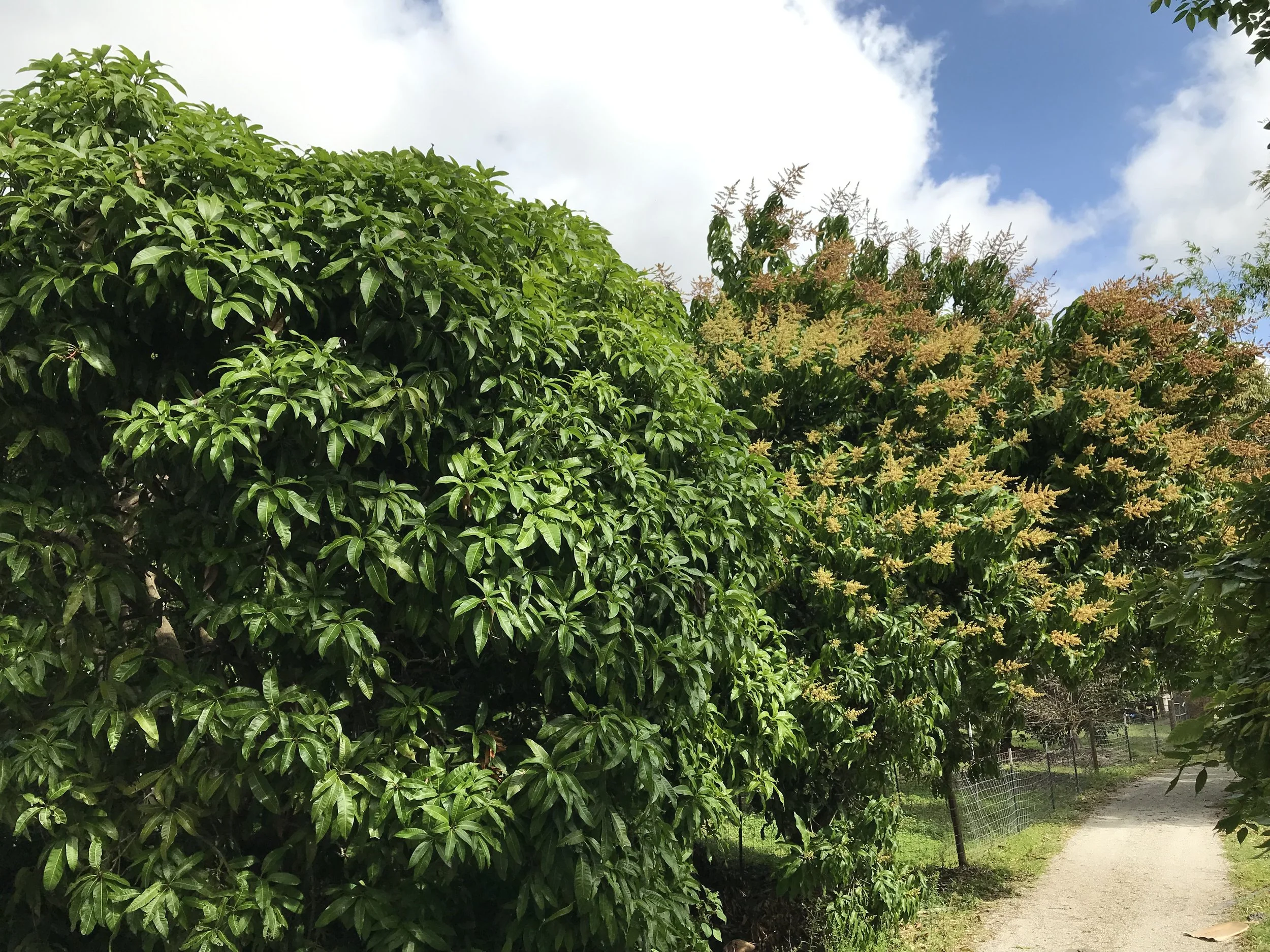
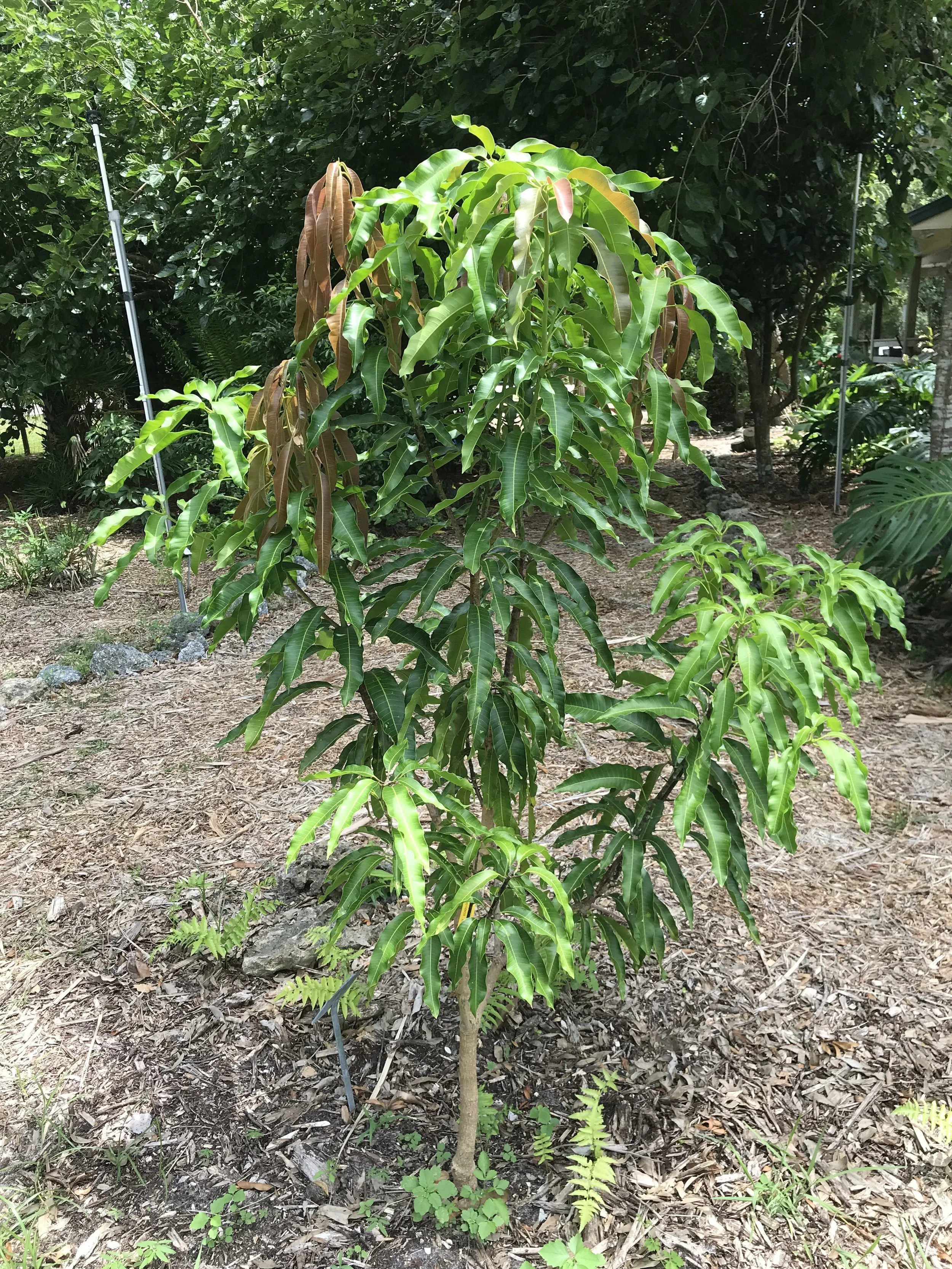
Because mango trees flower and bear fruit from the terminals, we want to increase the number of terminals through pruning. We use mango tipping in order to promote a full and highly branched tree canopy. This will help increase fruit production of your tree while keeping its size manageable.
We typically prune bearing fruit trees immediately after harvest and no later than August. We want to ensure that your mango tree is set up well to flower again the following year.
-
2.Mature Tree Pruning
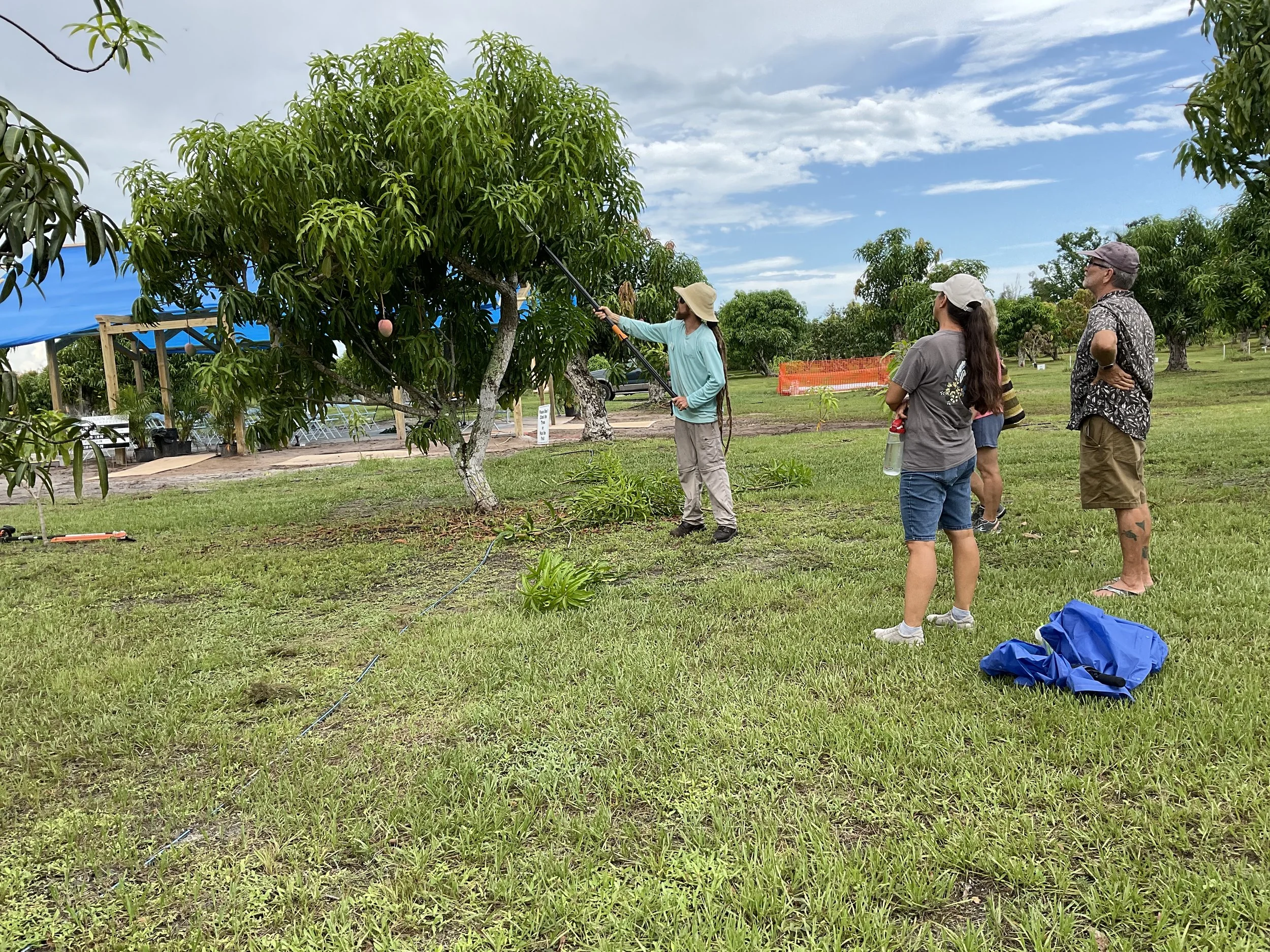
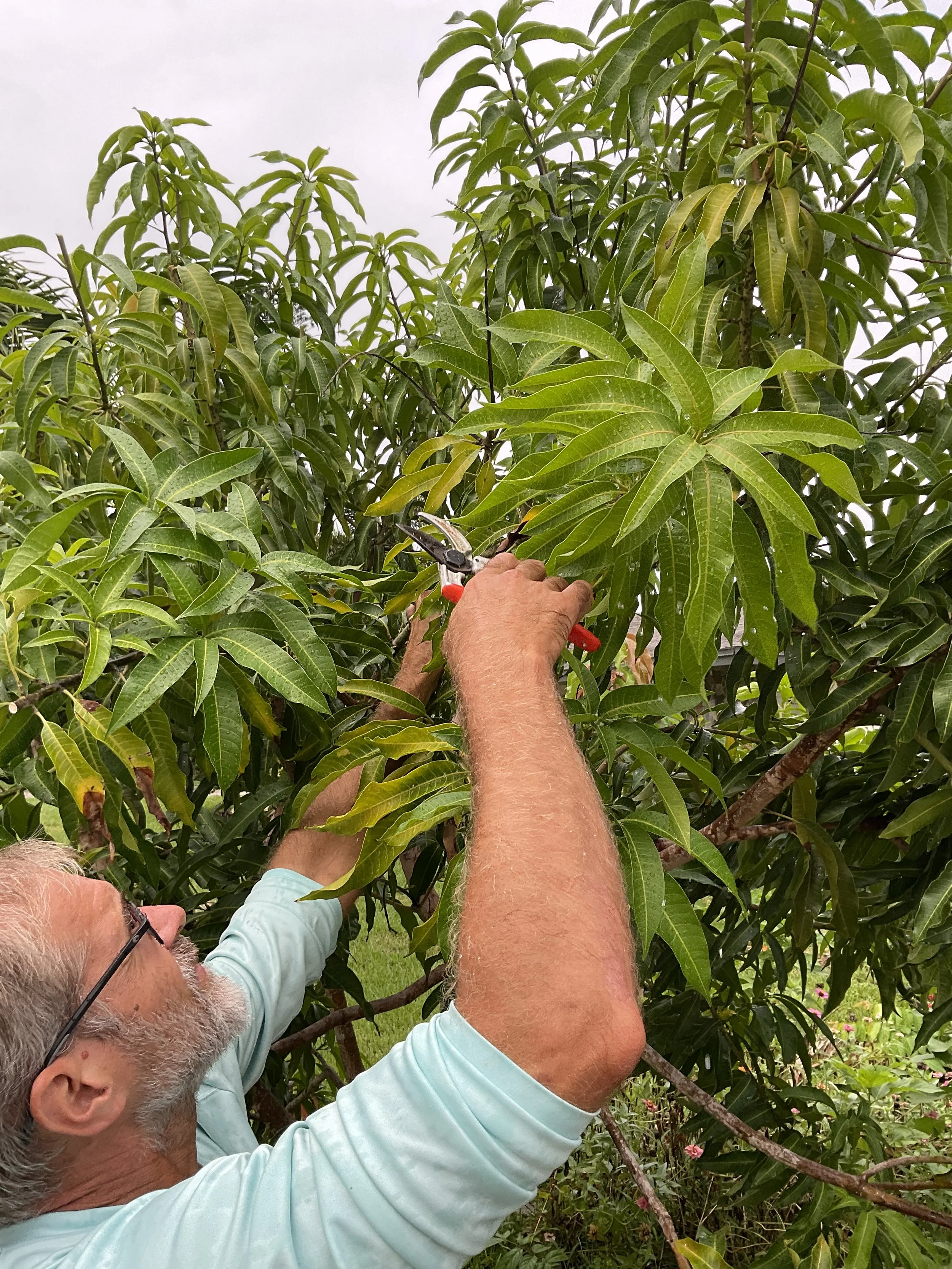
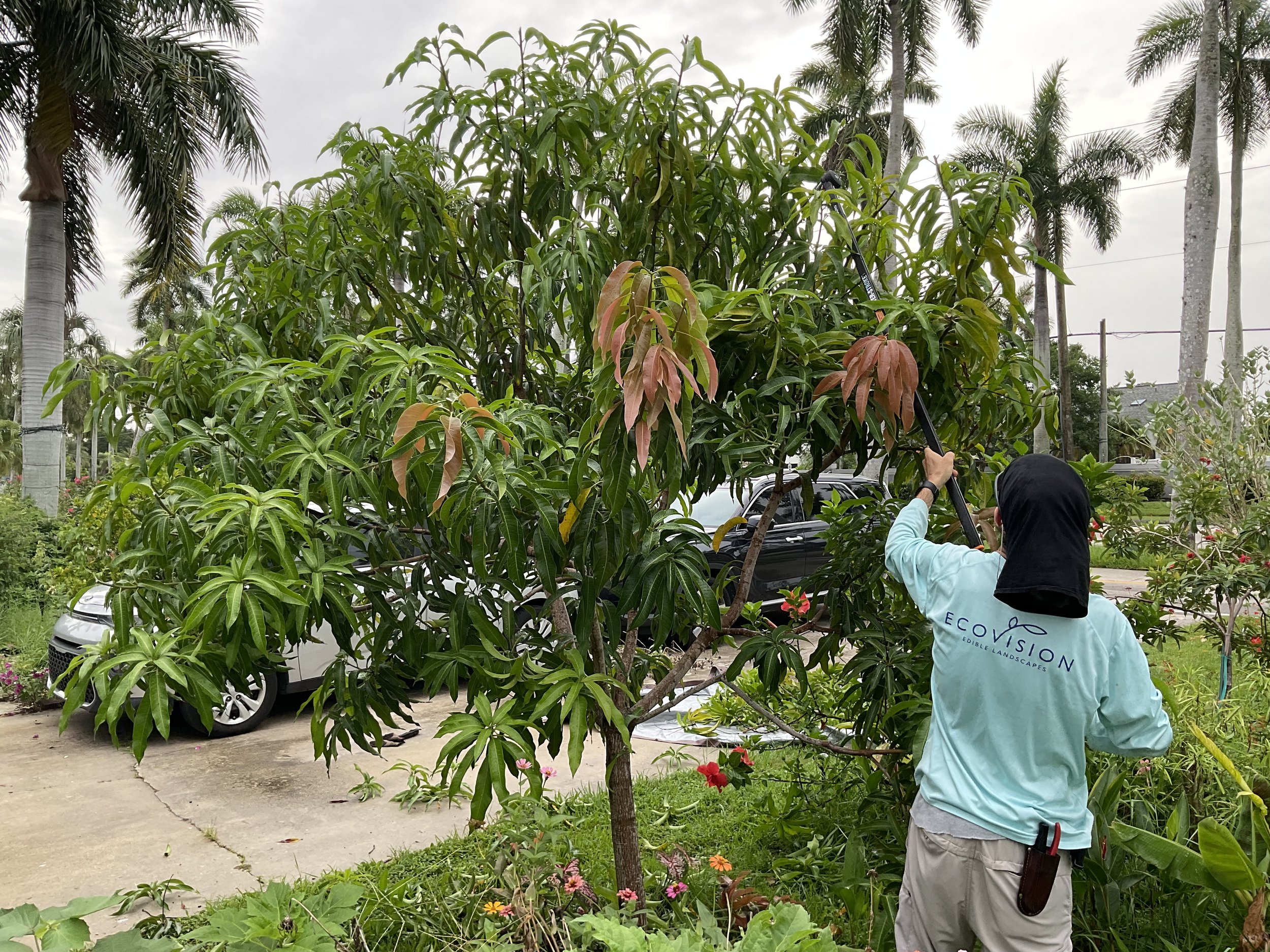
We use both tip pruning and selective limb removal for mango trees of bearing size. Tip pruning helps to create more terminals and promote greater branching and fruit production. However, some internal limbs may also need to be removed to improve air flow and light penetration into the canopy. This can also help reduce the damage during high winds by allowing air to move through the canopy.
Frequently Asked Questions
-
Mango trees should be pruned shortly after harvest which varies depending on variety. Most trees are finished producing between late July and early September. We avoid pruning after early September because the tree needs adequate time to mature the new flush of growth before cold temperatures arrive. For more details, check out our blog post.
-
To keep your tree small you must do two things:
Use tip pruning for the first few years after planting, to promote low branching and a spreading canopy.
Once the tree is bearing, practice annual tip pruning after harvest, along with selective removal of vertical branches that crowd the center of the tree.
Check out our blog post on mango pruning for more details.
-
Pruning a young tree should only require a set of hand pruners or loppers. Larger trees will also require a ladder for reaching the upper branches. Sometimes a pruning saw is necessary for selective removal of larger branches. Check out our blog post on mango pruning for more information. We do not advocate any wound paint or treatment - it’s best to let the tree heal over the pruning cuts.
-
Technically there aren’t any dwarf mango trees, but there are some varieties with a smaller growth habit, or that produce so much fruit they stunt their own growth. A great example is Pickering, which happens to be one of our favorite varieties for flavor and texture, too! A few “condo” varieties, like Cogshall, can be kept smaller through pruning and planting in a large container. Most mango varieties, however, will need regular pruning to be kept at a manageable size.
Ready to find out more?
Contact Ecovision for edible and ecological landscaping projects of any size. We specialize in designing and installing ecologically-focused landscapes for property owners located in Southwest Florida.
