

Support Plants: The Secret Helpers in a Southwest Florida Food Forest
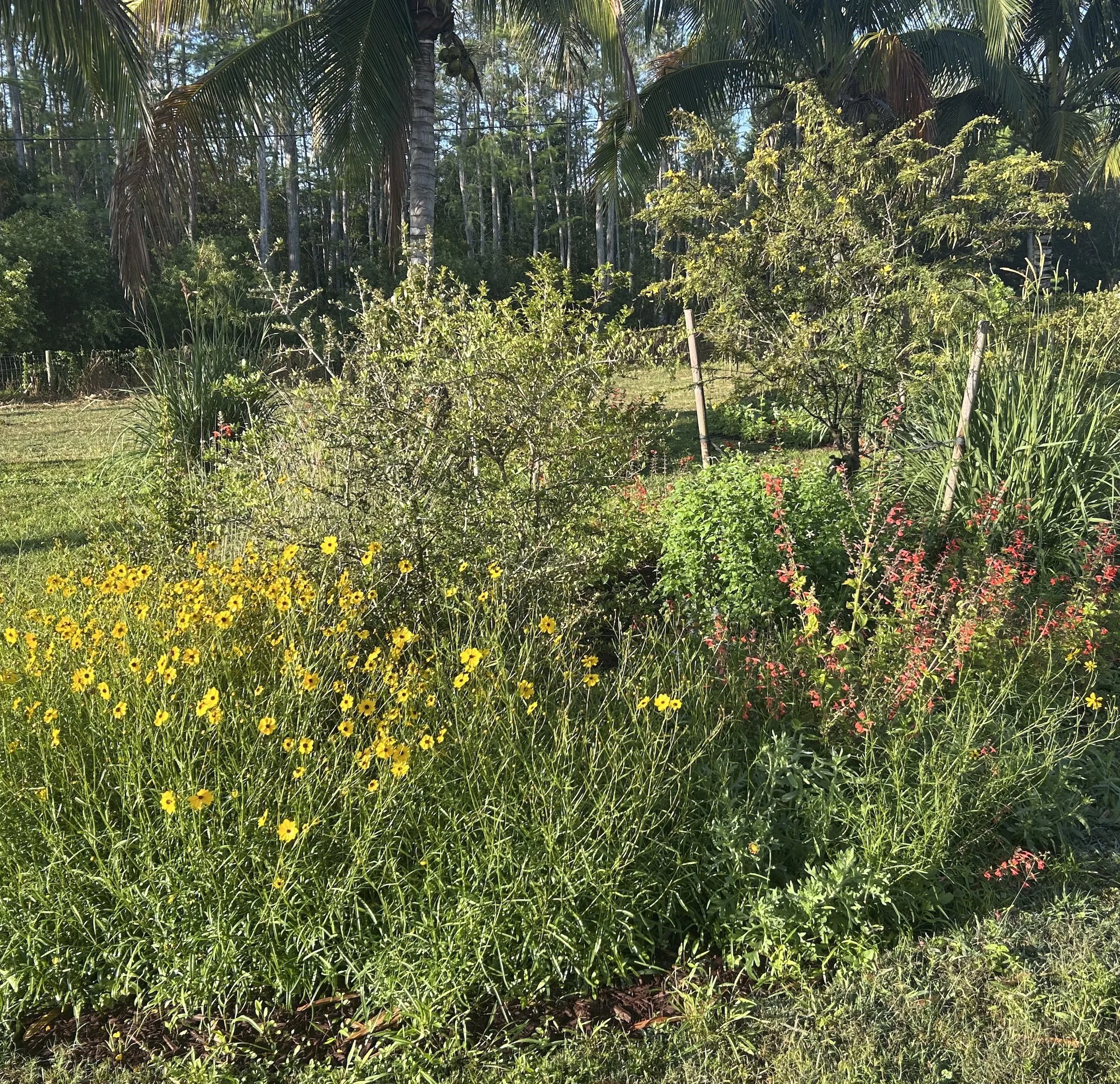
When you’re building a food forest or edible garden at home, it’s natural to focus on the fruit trees, vegetables, and herbs that will eventually produce food. But some of the most valuable plants in your garden are the ones that don’t always end up on your plate. These are support plants — companion species that help your garden stay healthier, more resilient, and easier to care for, especially in Southwest Florida’s sandy soils and warm, humid climate. For a beginner DIY gardener, support plants can feel like “extra plants,” but in reality they do a tremendous amount of work behind the scenes, helping the rest of the garden thrive.
One of the biggest benefits of support plants is their ability to improve soil over time. Much of Southwest Florida has very sandy soil that drains quickly and doesn’t naturally hold many nutrients and will wash away if not protected. Support plants such as pigeon pea, perennial peanut, and fakahatchee grass help change that by adding organic matter, supporting nitrogen-fixing soil bacteria, and holding soil in place with their root systems. As their leaves are pruned or fall and break down, they create a natural mulch and slowly enrich the soil around nearby fruit trees and garden beds. This living soil-building process reduces the need for constant fertilizer and helps plants grow stronger, deeper root systems.
Support plants also help attract pollinators and beneficial insects — an essential part of any productive edible garden. Native wildflowers like Scarlet Sage, Blanket Flower, Tickseed, and Goldenrod provide nectar and pollen for bees, butterflies, and other pollinators that play a key role in fruit and vegetable production. At the same time, many of these plants also draw predatory insects such as ladybugs and lacewings that help keep pest populations in balance. Instead of relying heavily on sprays or chemicals, the garden becomes a small, active ecosystem where nature helps manage many problems on its own.
In addition to supporting insects, many support plants help create habitat for birds, lizards, and other beneficial wildlife that contribute to a balanced garden environment. Native shrubs such as saw palmetto, Simpson’s Stopper, and beautyberry provide shelter, and seasonal food sources while also adding structure and layers to the landscape. These living habitats invite biodiversity into the garden, which in turn reduces pest pressure and creates a healthier, more stable system overall. In a well-designed food forest, wildlife is not just present — it becomes part of how the garden functions.
Support plants are also incredibly useful for out-competing weeds and helping retain moisture in the soil. In Southwest Florida, bare ground dries out quickly and weeds take advantage of any open space. Support plants such as fakahatchee grass, golden creeper, and sunshine mimosa act as a living mulch by shading the soil, reducing evaporation, and keeping root zones cooler during hot or dry periods. By covering the soil surface, they reduce erosion, suppress unwanted weed growth, and make the garden easier to maintain over time.
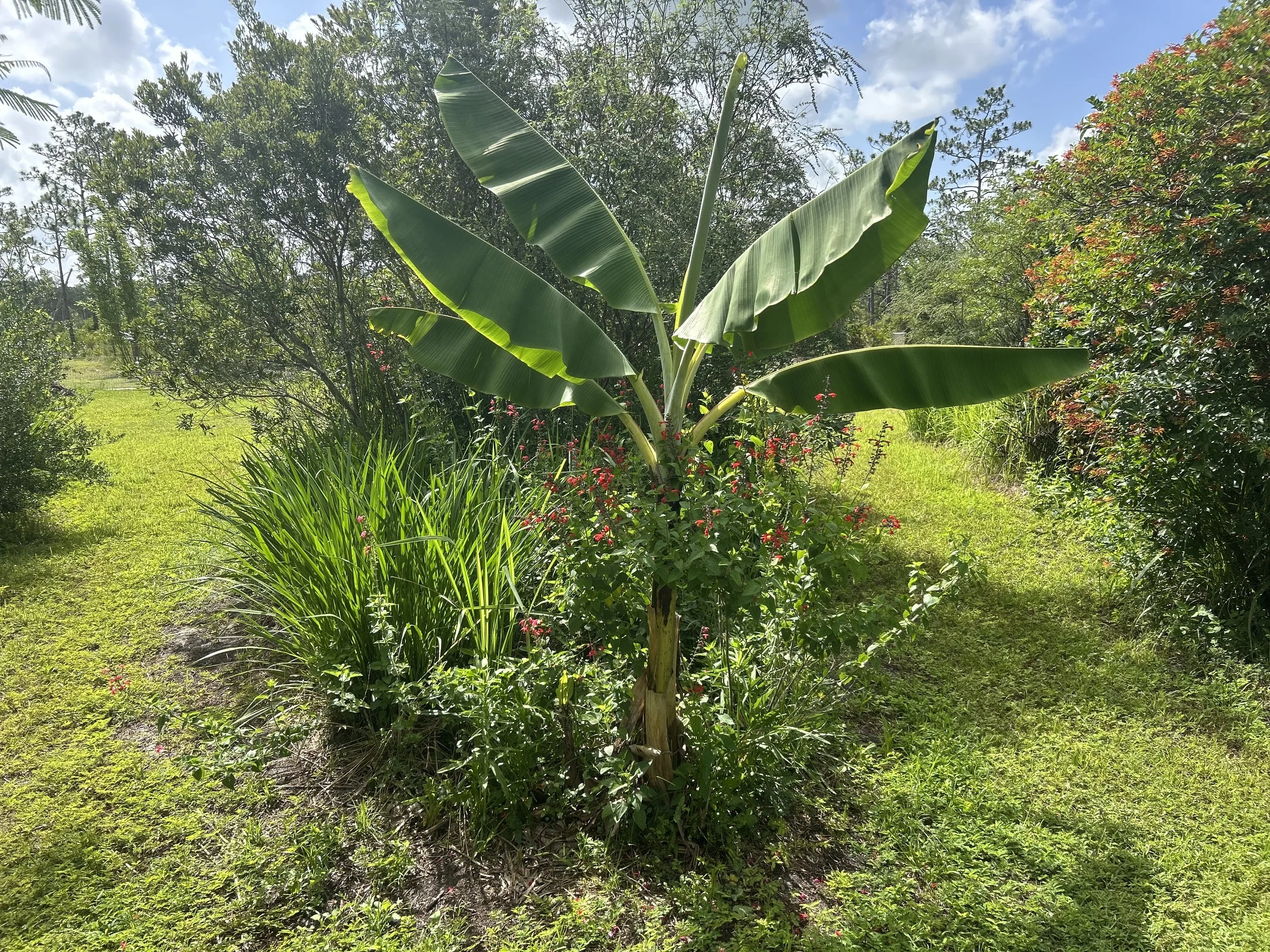
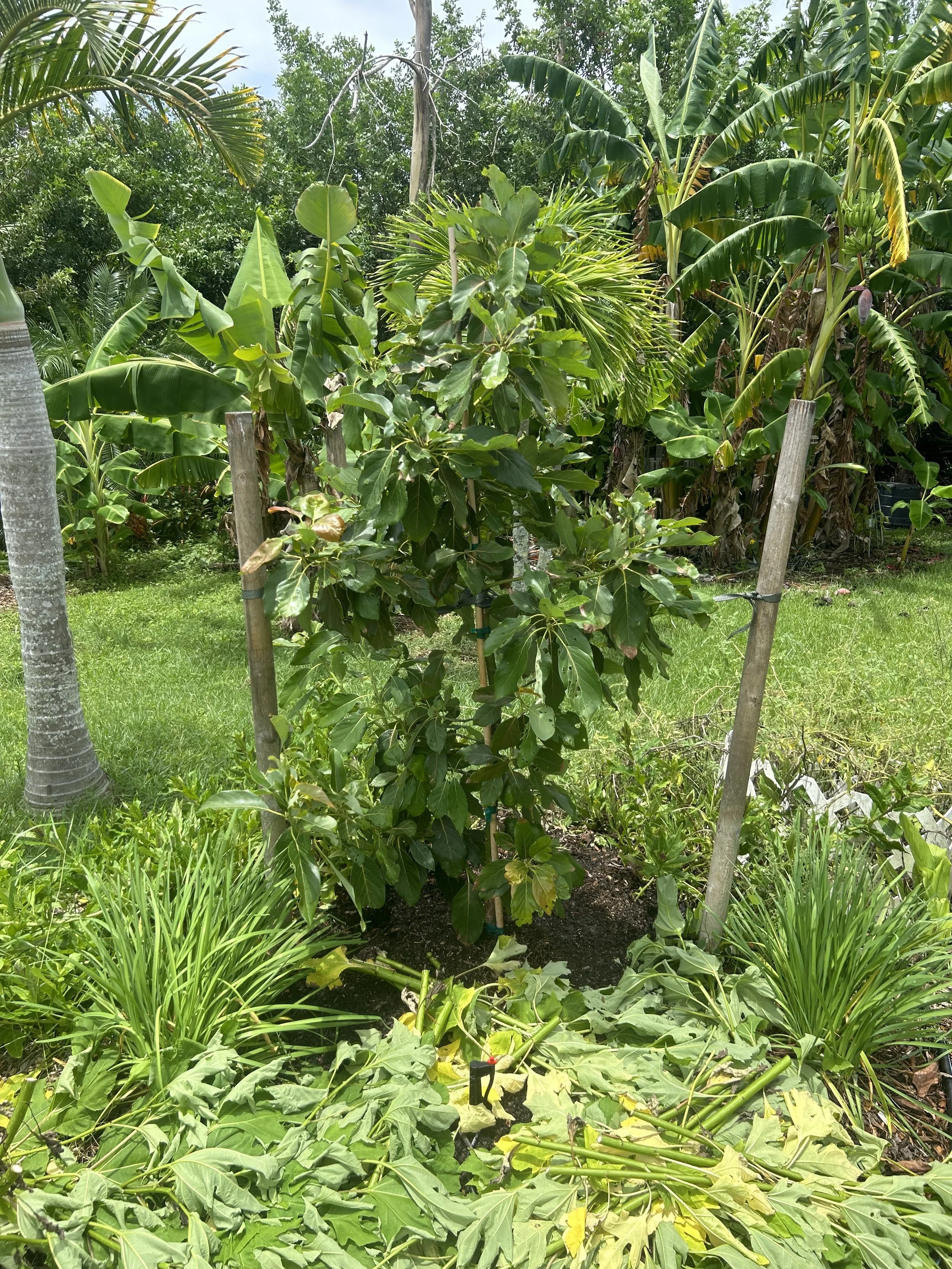
Another important role support plants play is sheltering young fruit trees as they get established. In nature, saplings rarely grow alone in an open lawn — they develop within plant communities that protect them from wind, harsh sun, and temperature extremes. Companion plants like bamboo, lemongrass, and Mexican sunflower (tithonia) can help create a softer microclimate around young trees by buffering wind, improving soil moisture, and providing organic matter through seasonal pruning. This protection helps young trees develop stronger roots and healthier growth during their critical early years. Bananas and papayas are great support plants that will provide a harvest while you wait for the long-lived fruit tree to become large.
For a beginner home gardener, support plants may not seem as exciting as fruit trees or vegetables, but they are truly the quiet partners that make a food forest successful. They improve soil naturally, attract pollinators, invite beneficial wildlife, reduce watering and weeding, and help trees and edible plants grow with less stress. Instead of working against the environment, support plants help you work with it — creating a garden that becomes more self-sustaining over time. Starting with just a few support plants around one fruit tree or garden bed is an easy way to experience how powerful these “helper plants” can be in a Southwest Florida edible landscape.
Ecovision’s Favorite Support Plants:
Lemon Grass
Fakahatchee Grass
Pigeon Pea
Perennial Peanut
Mexican Sunflower
Blanket Flower
Tickseed
Goldenrod
Scarlet Sage
Sunshine Mimosa